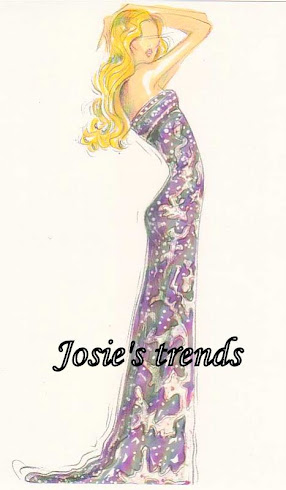
Fashion, a general term for a currently popular style or practice, especially in clothing. The more technical term, costume, has become so linked in the public eye with the term "fashion" that the more general term "costume" has in popular use mostly been relegated to special senses like
fancy dress or
masquerade wear, while the term "fashion" means clothing generally, and the study of it. For a broad
cross-cultural look at clothing and its place in society, refer to the entries for clothing, costume and fabrics. The remainder of this article deals with clothing fashions in the
Clothing fashions
2008 runway show
For detailed historical articles by period, see
History of Western fashion.
Early Western travelers, whether to
Persia,
Turkey or
China frequently remark on the absence of changes in fashion there, and observers from these other cultures comment on the unseemly pace of Western fashion, which many felt suggested an instability and lack of order in Western culture. The Japanese
Shogun's secretary boasted (not completely accurately) to a Spanish visitor in 1609 that
Japanese clothing had not changed in over a thousand years.
[2] However in
Ming China, for example, there is considerable evidence for rapidly changing fashions in
Chinese clothing.
[3]Changes in costume often took place at times of economic or social change (such as in
ancient Rome and the medieval
Caliphate), but then a long period without major changes followed. This occurred in
Moorish Spain from the 8
th century, when the famous musician
Ziryab introduced sophisticated clothing styles based on seasonal and daily timings from his native
Baghdad and his own inspiration to
Córdoba, Spain.
[4][5] Similar changes in fashion occurred in the Middle East from the 11
th century, following the arrival of the
Turks who introduced clothing styles from
Central Asia and the
Far East.
[6]The beginnings of the habit in Europe of continual and increasingly rapid change in clothing styles can be fairly reliably dated to the middle of the
14th century, to which historians including
James Laver and
Fernand Braudel date the start of Western fashion in clothing.
[7][8] The most dramatic manifestation was a sudden drastic shortening and tightening of the male over-garment, from
calf-length to barely covering the
buttocks, sometimes accompanied with stuffing on the chest to look bigger. This created the distinctive Western male outline of a tailored top worn over leggings or trousers.
Marie Antoinette was a fashion icon
The pace of change accelerated considerably in the following century, and women and men's fashion, especially in the dressing and adorning of the hair, became equally complex and changing.
Art historians are therefore able to use fashion in dating images with increasing confidence and precision, often within five years in the case of 15
th century images. Initially changes in fashion led to a fragmentation of what had previously been very similar styles of dressing across the upper classes of Europe, and the development of distinctive national styles. These remained very different until a counter-movement in the 17
th to 18
th centuries imposed similar styles once again, mostly originating from
Ancien Régime France.
[9] Though the rich usually led fashion, the increasing affluence of
early modern Europe led to the
bourgeoisie and even
peasants following trends at a distance sometimes uncomfortably close for the elites - a factor
Braudel regards as one of the main motors of changing fashion.
[10]Albrecht Dürer's drawing contrasts a well turned out bourgeoisie from
Nuremberg (left) with her counterpart from
Venice. The Venetian lady's high
chopines make her taller
Ten 16
th century portraits of
German or
Italian gentlemen may show ten entirely different hats, and at this period national differences were at their most pronounced, as
Albrecht Dürer recorded in his actual or composite contrast of
Nuremberg and
Venetian fashions at the close of the 15
th century (illustration, right). The "Spanish style" of the end of the century began the move back to synchronicity among upper-class Europeans, and after a struggle in the mid 17
th century, French styles decisively took over leadership, a process completed in the 18
th century.
[11]Though colors and patterns of textiles changed from year to year,
[12] the cut of a gentleman's coat and the length of his waistcoat, or the pattern to which a lady's dress was cut changed more slowly. Men's fashions largely derived from
military models, and changes in a European male silhouette are galvanized in theatres of European war, where gentleman officers had opportunities to make notes of foreign styles: an example is the "
Steinkirk"
cravat or
necktie.
The pace of change picked up in the 1780s with the increased publication of French engravings that showed the latest Paris styles; though there had been distribution of dressed dolls from France as patterns since the 16
th century, and
Abraham Bosse had produced engravings of fashion from the 1620s. By 1800, all
Western Europeans were dressing alike (or thought they were): local variation became first a sign of provincial culture, and then a badge of the conservative peasant.
[13]Although tailors and dressmakers were no doubt responsible for many innovations before, and the
textile industry certainly led many trends, the
history of fashion design is normally taken to date from 1858, when the English-born
Charles Frederick Worth opened the first true
haute couture house in Paris. Since then the professional designer has become a progressively more dominant figure, despite the origins of many fashions in street fashion. For women the
flapper styles of the 1920s marked the most major alteration in styles for several centuries, with a drastic shortening of skirt lengths, and much looser-fitting clothes; with occasional revivals of long skirts forms of the shorter length have remained dominant ever since. The four major current
fashion capitals are acknowledged to be
Milan,
New York City,
Paris, and
London.
Fashion weeks are held in these cities, where designers exhibit their new clothing collections to audiences, and which are all headquarters to the greatest fashion companies and are renowned for their major influence on global fashion.
Modern
Westerners have a wide choice available in the selection of their clothes. What a person chooses to wear can reflect that person's
personality or likes. When people who have cultural
status start to wear new or different clothes a fashion trend may start. People who like or respect them may start to wear clothes of a similar style.
Fashions may vary considerably within a
society according to
age,
social class,
generation,
occupation, and
geography as well as over time. If, for example, an older person dresses according to the fashion of young people, he or she may look ridiculous in the eyes of both young and older people. The terms '
fashionista' or
fashion victim refer to someone who slavishly follows the current fashions.
One can regard the system of sporting various fashions as a fashion
language incorporating various fashion statements using a
grammar of fashion. (Compare some of the work of
Roland Barthes.)
The Fashion Industry
The fashion industry is a product of the modern age. Prior to the mid-19
th century, virtually all clothing was handmade for individuals, either as home production or on order from dressmakers and tailors. By the beginning of the 20
th century—with the rise of new technologies such as the sewing machine, the rise of global capitalism and the development of the factory system of production, and the proliferation of retail outlets such as department stores—clothing had increasingly come to be mass-produced in standard sizes and sold at fixed prices. Although the fashion industry developed first in Europe and America, today it is an international and highly globalized industry, with clothing often designed in one country, manufactured in another, and sold in a third. For example, an American fashion company might source fabric in China and have the clothes manufactured in Vietnam, finished in Italy, and shipped to a warehouse in the United States for distribution to retail outlets internationally. The fashion industry has long been one of the largest employers in the United States, and it remains so in the 21st century. However, employment declined considerably as production increasingly moved overseas, especially to China. Because data on the fashion industry typically are reported for national economies and expressed in terms of the industry’s many separate sectors, aggregate figures for world production of textiles and clothing are difficult to obtain. However, by any measure, the industry
inarguably accounts for a significant share of world economic output.
The fashion industry consists of four levels: the production of raw materials, principally fibres and textiles but also leather and fur; the production of fashion goods by designers, manufacturers, contractors, and others; retail sales; and various forms of advertising and promotion. These levels consist of many separate but interdependent sectors, all of which are devoted to the goal of satisfying consumer demand for apparel under conditions that enable participants in the industry to operate at a profit.